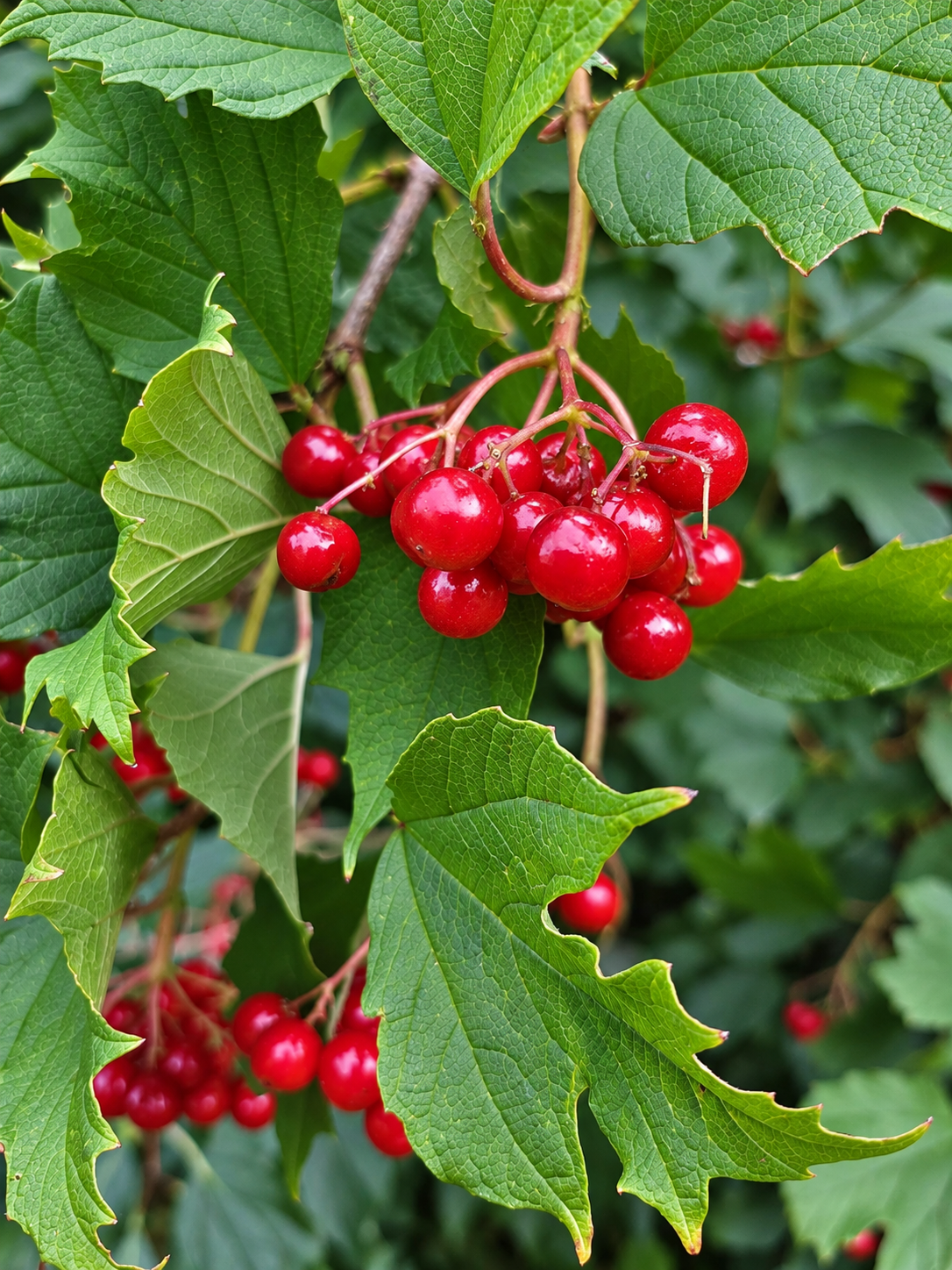
They went unnoticed for the last few years, surrounded by buckthorn. I have walked by them more times than I could count, but this year I noticed them. And that made me excited. What had been part of our untamed yard perimeter suddenly became something I could harvest and bring into our kitchen.
Highbush cranberry, often called American cranberrybush viburnum, is a familiar Wisconsin shrub that grows all over the place. Despite the name, it is not actually a cranberry at all. I might write a story about Wisconsin cranberries in the coming weeks, as Cranberry Festival is about to happen in Warren, Wisconsin. The native American cranberrybush produces clusters of bright red fruit in late summer and autumn that resemble a cranberry or red currant.
As someone who enjoys foraging, discoveries like this make me happy. There is something satisfying about realizing that food has been growing only a few feet from the house without ever paying much attention to it.
But now I am waiting for the first frost. Highbush cranberries are often left on the shrub into colder weather so that the fruit can become softer and sweeter. I should be patient. But everyone who knows me knows I probably will not be able to.
I am already considering picking some of the berries early and putting them directly into the freezer. Perhaps that is cheating, but Wisconsin weather will eventually do the same thing for me anyway. Any day now, actually. I would just be speeding up the process.
My current plan is to turn them into either a jam or a syrup. Jam seems the obvious choice. Something tart, wild, and connected to autumn sounds perfect with toast and a sharp cheddar.
But... the syrup might win. A tart highbush cranberry syrup seems destined for the many cocktails I drink. I can already imagine trying it outside alongside some gin and bourbon. There may be enough berries to make both.
Foraging has a way of changing how you view the landscape around you. We start to see plants around us quite directly. A tree may yield some fruit that is not available in stores or that we do not readily recognize. A plant we deem ornamental might have another purpose. Maybe that weed you are constantly pulling out of your garden will make a great salad. Either way, the discovery is not necessarily hidden deep in the woods, but rather something that has been growing along your own fence the entire time.
It is prudent to give a note about foraging. Never eat a wild plant, berry, mushroom, or other foraged item unless you are completely confident in its identification. Photographs and identification apps can be useful starting points, but they should never be your only source. The University of Wisconsin Extension has great resources to help with this.
And another note about foraging. Foraging in Wisconsin has a complicated history and legal status. Foraging laws and regulations vary depending on where you are and what you are harvesting. Check your local laws before even beginning.
And a final note: these foraged items are part of an ecosystem. Do not harvest too much, as it might disrupt the food cycle or put the plant at risk of dying out. Be responsible and considerate of the natural world.
If you are interested in finding local foraging spots, you might want to look at the app Falling Fruit.
Conversation beneath the branches
Comments
No approved comments yet. You may be the first to join the conversation.