Book review
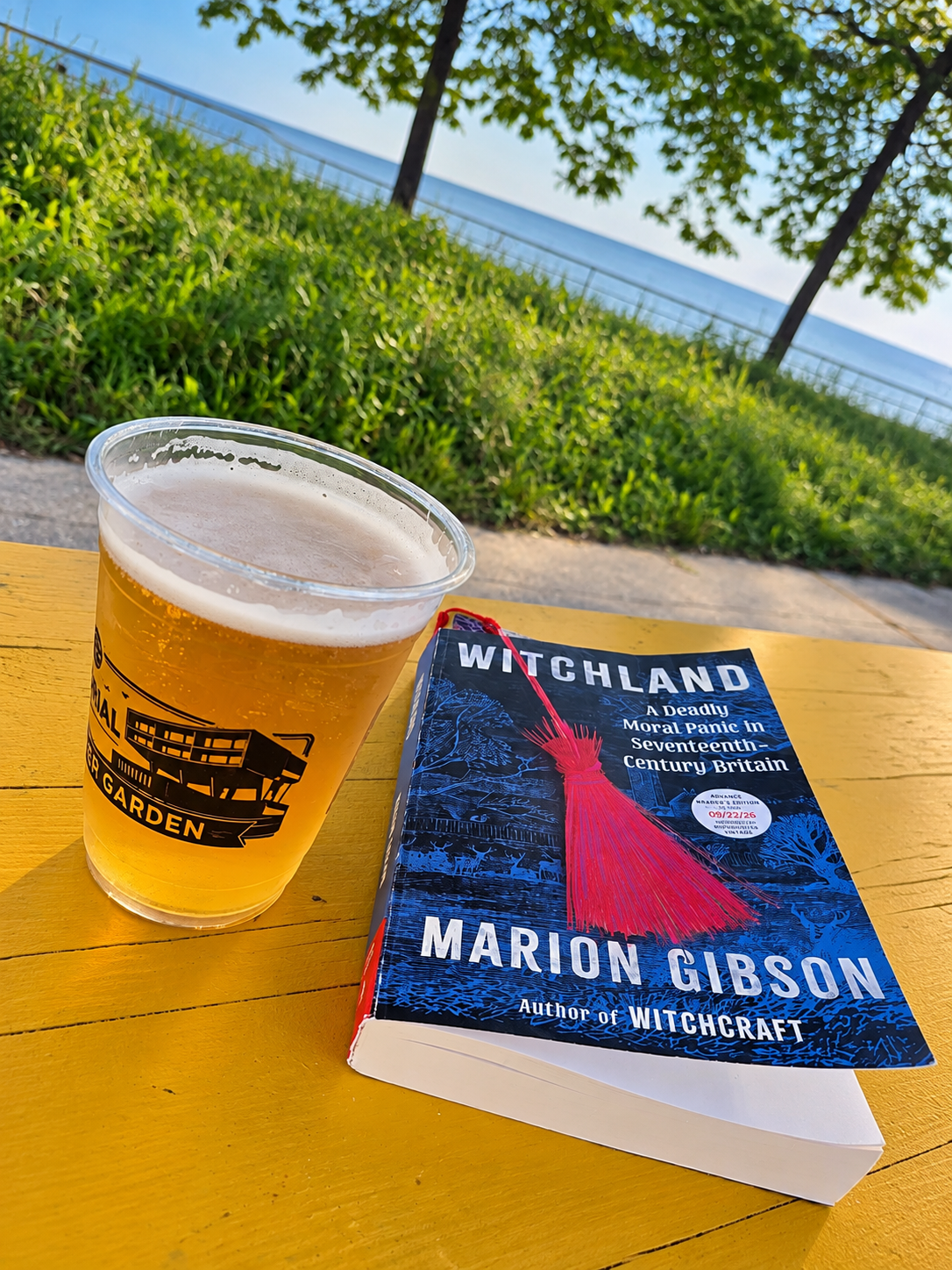
Witchland
By Marion Gibson
Review
I expected Witchland to be interesting. What I didn’t expect was how often I had to remind myself that the people in its pages weren’t characters. They were real. Real people living in real villages, surrounded by neighbors, churches, government officials, family members, grudges, fears, rumors, and beliefs that could sometimes work together and sometimes barely seemed to function at all.
That, more than anything else, is what Marion Gibson does so well in Witchland. Using surviving historical evidence, Gibson breathes life into these people so that they stop feeling like names buried in an old court record. Personalities begin to emerge, their relationships become visible, and their fears, as well as those of their accusers, become somewhat understandable. Even when only fragments remain in the historical record, Gibson manages to make those fragments feel human.
One of the things that made me relax into the book as a reader was Gibson herself. Every so often, she steps briefly into the story through an archive visit, a journey to one of the locations she is researching, or an observation about the material she uncovered. Normally, that sort of thing can become distracting, but in Witchland, I enjoyed it. It gave me the reassuring feeling that she had actually done the legwork to bring this book to life. She went to the places, looked through the records, and followed the evidence as far as it could reasonably take her. There is something comforting about that when reading a book about a subject that has accumulated centuries of mythology, exaggeration, and outright nonsense.
It also becomes clear during some of her visits that the past is not nearly as dead as we sometimes think. In some of these communities, memories of the witch hunts still linger. Local legends remain, stories are still told, and some people still claim connections to the “witches.” These events may be centuries old, but their memory still lingers quietly beneath the surface. I found that fascinating.
Gibson also does an excellent job of demonstrating just how slippery the idea of “witchcraft” could be. It wasn’t necessarily one clearly defined thing. Fairies might enter the discussion. The taming of demons might appear in another. The Devil, or Satan, might be the fear of the day. Folk healing might be seen as unholy. Sometimes “witchcraft” was little more than a bad case of coincidence or an upset neighbor. What constituted “witchcraft” depended enormously on who was doing the accusing, who was investigating, what political or religious institution was involved, and what those people already believed. The label could stretch surprisingly far.
That ambiguity becomes even more disturbing once the machinery behind the accusations comes into view. No single, neat authority is responsible for everything that happens in these stories. Instead, there are overlapping, and sometimes competing, levels of government, church influence, local officials, religious authorities, community pressures, and at times, what can only be described as a kind of vigilantism. People act because they believe they have the authority to act, and others appear to have tolerated it. Many people caught in the middle suffered because of it.
That messiness may actually be one of the most important things the book reveals to me. History is often much less orderly while it is happening than it appears several centuries later. Reading Witchland, I found myself thinking about our own time. We like to imagine ourselves removed from the world of witch hunts, but I’m convinced we are not. The targets have changed to some extent, the accusations are handled differently, and some institutions have changed, but the mechanisms still feel disturbingly familiar.
Public fears are still politically useful. Groups of people are still reduced to stereotypes, institutions still distort events, and religion and politics still overlap. Institutions, or those in charge of them at the time, will shape the story they want remembered. Revisionist history certainly did not end in the seventeenth century.
That thought followed me throughout the book. Four hundred years from now, what will remain of some of us? A government report? Just our obituary in a newspaper clipping? Some vilified account of a stereotype we were close enough to? A story told by someone claiming they are the only one with the truth? What happens when the records are incomplete, manipulated, destroyed, or simply lost? What will some future historian do with those fragments?
I hope they do what Gibson did and breathe some life back into our memories. It is an uncomfortable thought that we might not be remembered the way we want to be remembered, but it is also one of the reasons I appreciate the care she takes when bringing the “witches” back to life.
For a book grounded in historical research, Witchland is also remarkably approachable. The subject matter could easily become exhausting, but Gibson navigates it without making the read feel like you’ve accidentally enrolled in a graduate seminar. The writing is clear without being simplistic. You get the complexity of the period without needing to know specialized jargon or struggle through the language style of seventeenth-century Britain.
I also appreciated how thoroughly Gibson’s notes and sources are laid out. They make it possible for a curious reader to go back and follow the trail for themselves, to look at the evidence and better understand what Gibson herself was working from. That accessibility adds another layer of trust to the book because the research never feels hidden behind the author’s conclusions.
By the end of the book, I think the thing that stayed with me most was not “witchcraft” or even the witch hunts themselves. It was memory. Who will be forgotten? Who will be believed? Who gets to write down our history?
I give Gibson’s Witchland a 5 out of 5 for anyone who wants to understand the people living during the witch hunts, anyone interested in history, or perhaps even those seeking to understand how these kinds of persecutions happen and how they might be prevented from happening again.
As a note, I use quotation marks around “witches” and “witchcraft” because we are largely being told that this is what these people were. I have no reason to believe that many of the victims actually considered themselves witches or practiced anything they would have called witchcraft. I also want to acknowledge that witches exist today and that many people willingly practice witchcraft. I do not want to lump self-proclaimed witches together with people who were only accused of being one.
This page contains an affiliate link. If you make a qualifying purchase through it, I may earn a small commission at no additional cost to you.
Conversation beneath the branches
Comments
No approved comments yet. You may be the first to join the conversation.